

If you are facing a DUI charge in Los Angeles or anywhere in California, an ignition interlock device is probably in your future. The state built its entire license reinstatement process around them.
That was supposed to end. The statewide program carried a sunset date of January 1, 2026, and drivers spent years assuming the requirement would expire on its own. Instead, the Legislature passed Assembly Bill 366 and extended the program through January 1, 2033.
Fight My Ticket has defended Los Angeles drivers since 1998, and our attorneys bring more than 100 years of combined experience to cases where a license is on the line. We have watched drivers accept interlock terms they did not owe and pay full price for a device the law says they could get for a fraction of that. We have also watched a single missed calibration appointment erase months of credit.
An ignition interlock device is not a formality. It is a monitored, reported, months-long restriction with its own violation rules, and every one of those rules can extend your term.
What an Ignition Interlock Device Is and How It Works
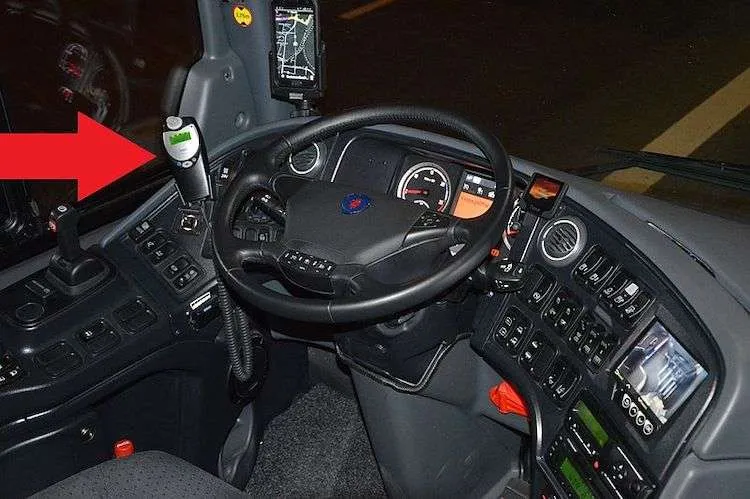
An ignition interlock device, commonly called an IID or a car breathalyzer, is a breath-alcohol analyzer wired into your vehicle’s ignition. You blow into it before the engine will start.
The device does not stop working once you are driving. California law requires random retests, which the statute defines as breath tests performed at random intervals after startup while the motor is running.
The threshold matters more than most drivers realize. Under California Vehicle Code section 23575.3, a bypass means either failing to take a random retest or failing to pass one with a breath alcohol concentration exceeding 0.03 percent.
That is far below the 0.08 percent limit for a driving under the influence charge. Mouthwash, certain medications, and a drink from the night before have all triggered readings at that level.
Every startup attempt, retest, and reading is logged and reported. The device is a monitoring tool, not just a lock.
That data goes to your installer and, when something looks wrong, to the state. Drivers who treat the device as a private inconvenience tend to learn otherwise when a suspension notice arrives in the mail.
How Long You Need an IID in California
The term depends on your conviction and your prior record, and the statute sets it out precisely. Drivers convicted of a standard driving under the influence offense face the following terms:
- No priors: The court may order a device for a term it determines, not to exceed six months.
- One prior: A mandatory term of 12 months.
- Two priors: A mandatory term of 24 months.
- Three or more priors: A mandatory term of 36 months.
A conviction involving injury runs longer. With no priors, the term is a mandatory 12 months, rising to 24 months with one prior and 36 months with two.
A prior means a qualifying conviction that occurred within 10 years of the current violation. A case from nine years ago still counts against you, and many drivers assume otherwise.
One detail changes the entire calendar. The term does not start at conviction; it begins when your driving privilege is reinstated or a restricted license is issued, which means delay on your end simply pushes the end date further out.
The First-Offense Choice Most Drivers Get Wrong
A first offense without injury is the one place the law still gives you a real decision. The statute allows only one of three paths, and you cannot combine them.
The court may order an interlock restriction for up to six months, which lets you drive anywhere once the device is installed. Alternatively, you may apply to the Department of Motor Vehicles for a restriction under section 13352.4, which typically limits driving to work and your treatment program for a longer period.
Drivers who choose without advice usually pick based on the sticker price of the device. That is the wrong variable, because the restriction that fits depends on your commute, your job, and whether the shorter term is worth the monitoring.
What an Interlock Device Costs
Providers set their own pricing, so treat every figure as a range. Installation generally runs somewhere between $75 and $350 depending on your vehicle and the company, with monthly monitoring fees commonly falling between $75 and $150.
Calibration adds to it. Because the device must be serviced regularly, drivers typically pay another $25 to $75 each visit across the length of the term.
Multiply those monthly numbers across a 12-month or 24-month term and the total climbs past what most people budget for. Many drivers never learn that California caps what they actually owe.
The Income-Based Fee Schedule You Are Entitled To
California law requires every certified interlock provider to offer a sliding fee scale tied to the federal poverty level. Most drivers are never told it exists.
Under section 23575.3, a driver at or below 100 percent of the federal poverty level pays 10 percent of the provider’s standard program costs. Drivers between 101 and 200 percent pay 25 percent, drivers between 201 and 300 percent pay 50 percent, and drivers between 301 and 400 percent pay 90 percent. Anyone receiving CalFresh benefits pays 50 percent.
The manufacturer absorbs the remainder. You verify income with your previous year’s federal tax return, three months of income statements, or Employment Development Department verification of unemployment benefits.
The Department of Consumer Affairs may impose a civil assessment of up to $1,000 on a provider that fails to inform a driver of this schedule. If nobody mentioned it to you, that silence is the provider’s problem, not yours.
Installation, Calibration, and the Paperwork That Trips People Up
The device itself is the easy part. The reporting requirements are where cases fall apart.
After installation, you submit a Verification of Installation form, known as the DL 920, to the Department of Motor Vehicles. Without that form on file, your restricted license application goes nowhere.
You must then have each equipped vehicle serviced by the installer at least once every 60 days so the device can be recalibrated and monitored. This is not a suggestion, and the deadline does not move for vacations or work schedules.
Miss it and your installer files a Notice of Noncompliance, the DL 921, with the Department of Motor Vehicles. A suspension or revocation of your driving privilege follows.
Consider a driver in Los Angeles who moves in month four of a 12-month term and misses one service window during the move. The installer reports it, the suspension issues, and the driver now has a reinstatement problem layered on top of a term that stopped accruing credit.
Keep every service receipt and confirmation. When a dispute comes down to whether you appeared, your own records are frequently the only proof available.
What Counts as an Interlock Violation
The statute and the monitoring rules treat several ordinary-seeming events as violations. Watch for the following:
- Failing to take a random retest while driving
- Failing a retest with a breath alcohol reading above 0.03 percent
- Attempting to remove, bypass, or tamper with the device
- Failing three or more times to meet maintenance or calibration requirements
- Allowing the device to be removed before your term ends
The consequence is quieter than a new charge and often worse in practice. Any period in which you were not in compliance does not count toward your mandatory term. A driver who spends two months out of compliance on a 12-month restriction is now looking at 14.
That clock does not reset in your favor, and it does not forgive an honest mistake. This is the mechanism that turns a manageable term into a year of extra monitoring, and it is why documentation of every service visit is worth keeping.
Exemptions and Limits Worth Knowing
Not every driver has to install immediately. The statute recognizes an exemption for drivers with no vehicle, no access to one at their residence, and no continued access to the vehicle they were driving at the time of arrest. Certifying those facts to the Department of Motor Vehicles defers installation until the situation changes.
The window is narrow. You must certify within 30 days of notification, and you acknowledge that the requirement attaches the moment you buy or gain access to a vehicle.
Motorcycles sit outside the program because the state has not certified a device for them. A driver under an interlock restriction is prohibited from operating a motorcycle for the entire restriction period, which surprises riders who assumed the gap worked in their favor.
One limit catches people constantly. Installing a device does not give you the right to drive, and you still need a valid license. The requirements apply only to convictions for violations that occurred on or after January 1, 2019.
How Our Team Approaches DUI and Interlock Cases
We start with whether the underlying charge holds up. An interlock term is a consequence of a conviction, and the strongest way to shorten it is to fight what produces it.
When a conviction is realistic, our attorneys focus on the terms that follow. That means the length of the restriction, which path a first offense should take, and whether you are being charged correctly for the device.
Fight My Ticket has spent decades in Southern California courtrooms handling exactly these cases. Drivers deserve to know what the law actually requires before they sign anything a provider puts in front of them.
Frequently Asked Questions
Drivers facing an interlock restriction ask us these questions constantly.
Does an ignition interlock device detect anything other than alcohol?
No. The device measures breath alcohol concentration only, though the interlock requirement itself applies to convictions involving alcohol or a combination of alcohol and drugs.
Can I drive someone else’s car with an IID restriction in California?
Only if that vehicle has a certified device installed. The statute defines operating to include vehicles you do not own, so borrowing an unequipped car is a violation.
What happens if I fail a rolling retest?
The device logs the reading and your installer reports it. A failed retest above 0.03 percent counts as a bypass, and the noncompliance period is subtracted from your credited term.
Can I get the interlock device removed early?
Not by request. Removing it before your term ends triggers installer notification to the Department of Motor Vehicles and typically a suspension of your driving privilege.
Do I still need an IID if I do not own a car?
You may defer by certifying to the Department of Motor Vehicles within 30 days that you own no vehicle and have no access to one. The requirement attaches again the moment that changes.
Facing a DUI in Los Angeles? Protect Your License Before the Interlock Term Starts
A 12-month mandatory term on a single prior conviction is not a number you negotiate after the fact. It is set by statute, and the only real leverage sits at the front of the case, before a plea is entered.
Our legal team has defended California drivers since 1998, and our attorneys bring over 100 years of combined experience to license and driving under the influence matters. We tell you plainly what the law requires, what your provider owes you on cost, and where the case has room to move.
Interlock terms run on the Department of Motor Vehicles calendar, and that calendar starts whether or not you have talked to anyone. A review now costs you nothing and can reshape the next two years of driving.
Text us your case details or submit them online for a free case evaluation, or call our team at (323) 435-6045.