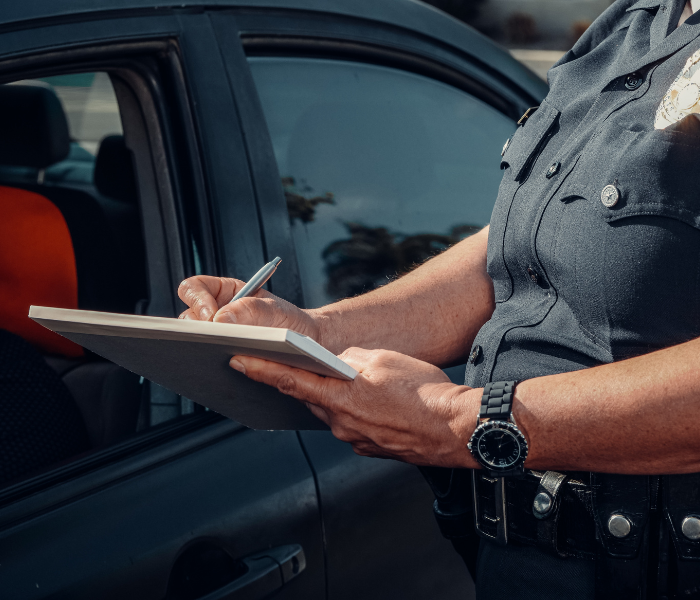


If you’re visiting, studying, or working in California for a while, you can usually drive here on your out-of-state license. But that license doesn’t protect you from California traffic laws. If an officer pulls you over, you can get the same tickets a California driver gets, and in some cases, a charge for driving without a valid license.
Here’s when your out-of-state license is valid in California, what happens if you get a ticket here, and how that ticket can follow you home. Contact Fight My Ticket today to get help without coming back.
Can You Drive in California With an Out-of-State License?
Yes, if you’re a nonresident. Under Vehicle Code 12502, drivers 18 or older with a valid license from their home state can drive in California. There’s no set time limit for adult visitors. Your out-of-state license stays good here as long as:
- You are not a California resident
- Your license is valid in the state that issued it
- Your license covers the type of vehicle you’re driving
Drivers who are 16 or 17 have a shorter window. They can drive on an out-of-state license for up to 10 days after entering California unless they get a nonresident minor’s certificate from the DMV.
How California Decides If You’re a Resident
Residency is the line that matters. Vehicle Code 12505 looks at where your permanent home is, and the state treats certain actions as proof you live here, including:
- Registering to vote in California
- Claiming a homeowner’s property tax exemption
- Paying in-state tuition at a California public college
- Using any other benefit that’s only available to California residents
If you’ve done any of these, a court is likely to treat you as a resident, and your out-of-state license stops being enough.
What If I’m Moving to California?
Once you become a California resident, the California DMV requires you to get a California driver’s license within 10 days. If driving is part of your job, such as rideshare, delivery, or sales routes, get your California license right away rather than waiting out the 10 days.
You also have 20 days to register a vehicle you brought from another state.
How to transfer your driver’s license to California:
- Fill out the driver’s license application online through the DMV
- Book a DMV appointment and bring proof of identity and California residency
- Pay the application fee, take a vision test, and take the knowledge test if required
- Surrender your out-of-state license
A common question is whether you can keep your out-of-state driver’s license after you move. You can’t. Under the Driver License Compact, each driver should hold one license from one state, so you’ll give up your old license when you get a California one.
What Happens If You Don’t Switch in Time?
If you become a resident and keep driving on your old license past the deadline, an officer can cite you under Vehicle Code 12500(a) for driving without a license. The 12500(a) VC charge is often filed as a misdemeanor, which is more serious than a regular traffic ticket and can carry a criminal record.
These cases often come down to whether you actually were a resident on the day you were stopped. If you had a valid out-of-state license and hadn’t established residency yet, that can be a strong defense.
Can You Get a Traffic Ticket in California With an Out-of-State License?
Yes. California traffic laws apply to everyone driving on California roads, no matter which state issued your license. An officer can cite you for any violation, and the ticket goes through the same California traffic court system as a ticket issued to a local driver.
The most common California traffic tickets out-of-state drivers get include:
- Speeding tickets
- Red light tickets, including camera tickets mailed to the registered owner
- Stop sign tickets
- Cell phone and texting tickets
- Unsafe lane changes and illegal turns
- Driving without a valid license
Rental cars are no exception. If you get a camera ticket in a rental, the notice usually goes to the rental company first, which then passes it on to you, often with an added fee. You can see every type of case we handle on our ticket types page.
What Happens If You Get an Out-of-State Speeding Ticket in California?
If you’re stopped for speeding with an out-of-state license, the ticket works the same way it does for a California driver. You sign the citation as a promise to appear, and the case goes to the superior court in the county where you were stopped. Here’s what to expect.
How Much Is a Speeding Ticket in California?
The base fine for most speeding tickets is set by Vehicle Code 22350 and the state’s bail schedule:
| Speed Over the Limit | Base Fine |
|---|---|
| 1 to 15 mph | $35 |
| 16 to 25 mph | $70 |
| 26 mph or more | $100 |
| Over 100 mph | Up to $500 |
The base fine is only the start. State and county penalty assessments, court fees, and surcharges are added on top, so a $35 base fine can add up to a few hundred dollars. The exact cost of a California speeding ticket depends on the county and the speed.
Your Deadline Still Applies
Your citation lists a date to appear or respond. Living in another state doesn’t extend that date. Our guide on how long you have to pay or contest a ticket in California covers the timeline.
Ignoring the Ticket Makes It Worse
Some out-of-state drivers assume they can ignore a California ticket once they’re home. That’s a costly mistake. If you miss your deadline, the court can:
- Add a civil assessment of up to $100 on top of your fine
- Charge you with failure to appear under Vehicle Code 40508, a misdemeanor
- Notify the DMV, which can block your privilege to drive in California
- Send the unpaid balance to collections
California isn’t a member of the Nonresident Violator Compact, the agreement most states use to suspend a driver’s home license over unpaid out-of-state tickets. That doesn’t make the ticket go away. The open case and any DMV hold stay in place until you deal with them, and they can come up when you return to California or apply for a California license later. Learn more about what happens if you don’t pay a traffic ticket in California.
Does a California Speeding Ticket Follow You Home to Another State?
In most cases, yes, and the same goes for other moving violations. California has been part of the Driver License Compact since 1963. Under Vehicle Code 15022, California reports traffic convictions of out-of-state drivers to the state that issued their license.
What your home state does with that report depends on its own laws. Vehicle Code 15023 says that for most violations, the home state gives the conviction whatever effect its own laws provide. That means:
- Your home state may add points to your license as if the ticket happened there
- Some states record out-of-state tickets without adding points
- The conviction can show up on the driving record your insurance company checks
A few states, including Georgia, Massachusetts, Michigan, Tennessee, and Wisconsin, aren’t members of the Driver License Compact. Even so, states can still share driving records in other ways, so don’t count on an out-of-state ticket staying off your record.
Can Out-of-State Drivers Use Traffic School?
Traffic school can keep a point off your California record, but it may not help you back home. Eligibility is set by California Rules of Court, rule 4.104, and courts handle out-of-state licenses differently. Some courts allow it, and others require a valid California license. Even if a court lets you complete traffic school, your home state decides whether the conviction shows up on your record there.
Do Out-of-State Tickets Affect Your Insurance?
They can. Insurance companies set your rates based on your driving record, and a California conviction reported to your home state can end up on that record. If it does, your insurer may treat it like any other ticket when your policy renews.
Your license and policy also need to match where you actually live. If you’ve moved to California but still carry an out-of-state license and insurance, your insurer may question coverage after a stop or an accident. Read more about how much a ticket raises your insurance rates.
Do You Have to Go to Court for an Out-of-State Ticket?
Not always. Most California traffic tickets are infractions, and you usually have a few ways to handle them without coming back:
- Pay the fine. This is the fastest option, but paying is a guilty plea, and the conviction can be reported to your home state.
- Request traffic school. If the court allows it for your license, this can keep the point off your California record.
- Contest by mail. A trial by written declaration lets you fight the ticket in writing.
- Hire an attorney. For most infractions, an attorney can appear in court for you.
Some tickets do require a court appearance, such as misdemeanor charges like driving without a valid license. An attorney can tell you which kind of ticket you have and whether you need to be there in person.
Can You Fight an Out-of-State Speeding Ticket in California?
Yes. You have the same right to contest a ticket as any California driver, and you have options that don’t require flying back for court.
Trial by written declaration. Under Vehicle Code 40902, you can contest most infractions in writing. You submit your statement and evidence by mail, and the officer does the same. If you lose, you can usually ask for a new trial in person. See our guide to trial by written declaration in California.
Hire a traffic ticket attorney. Our attorneys review the details that often decide these cases, such as:
- How the officer measured your speed (radar, lidar, pacing, or aircraft)
- Whether the speed limit was set by a valid, current engineering and traffic survey
- Calibration and training records for the equipment used
- Whether the citation has errors or missing information
When you’re trying to figure out how to fight a speeding ticket in California from another state, an attorney who knows the local courts can save you time, travel, and points on your record.
Frequently Asked Questions
How long can you drive in California with an out-of-state license?
If you’re 18 or older and a nonresident, there’s no fixed limit as long as your license stays valid. Once you become a California resident, you have 10 days to get a California license.
What happens if you get a ticket in another state?
The ticket is handled by the courts in the state where you got it, and you have to resolve it there. If you’re convicted, that state usually reports it to your home state, which applies its own rules for points and record keeping.
Does California add points for out-of-state tickets?
California drivers who get tickets in other compact states can have those convictions reported to the California DMV and added to their record. The same system works in reverse for out-of-state drivers ticketed in California.
Do you have to pay an out-of-state speeding ticket?
You have to resolve it by paying, contesting, or attending traffic school if the court allows it. Ignoring it can lead to added fees, a failure to appear charge, and a hold on your ability to drive in California.
Got a California Ticket on an Out-of-State License? Text Us.
Whether you’re visiting, just moved here, or were cited for driving without a valid license, Fight My Ticket can help. Our firm has defended drivers for 30+ years, and our legal team brings over 100 years of combined experience to every case. We’re easy to work with, and we handle the court process so you don’t have to rearrange your life around it.
Text a photo of your ticket to (323) 435-6045 or submit your ticket online for a free case evaluation.