
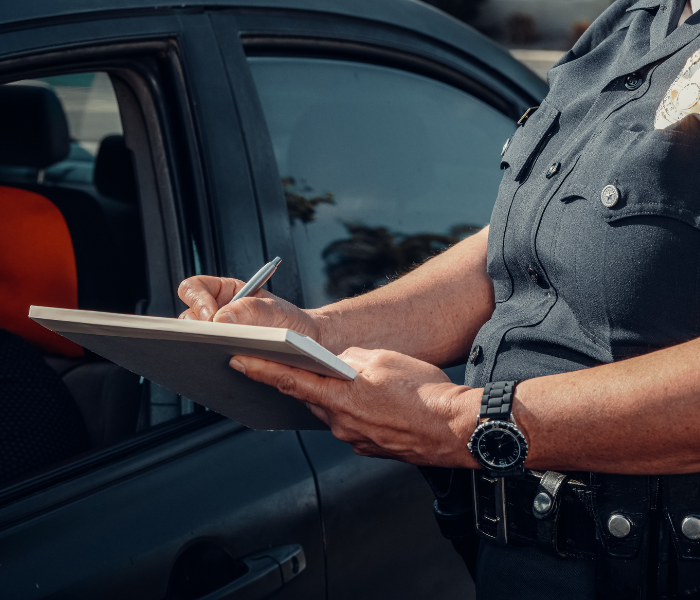

The ticket cost you $238 at the courthouse. Then your renewal notice arrived, and the number at the bottom did not look like last year’s. That gap is where a traffic ticket does its real damage, and most drivers do not see it coming until the bill lands.
A citation in California does not stop at the fine. The conviction goes onto your Department of Motor Vehicles record, adds a point, and becomes a public document your insurer is entitled to pull.
Under state insurance rules, your driving record carries more weight in your premium than almost anything else about you. Your carrier does not need to be told about the ticket. It checks on a schedule set by regulation, and the conviction is waiting when it does.
At Fight My Ticket, our Los Angeles traffic ticket lawyers have handled California citations for 30+ years. We treat a ticket as what it actually is: A multi-year financial hit that begins the moment the conviction posts.
Below is what one violation costs, how long the increase lasts, and what you can still do about it before your next renewal.
The Fine Is the Cheapest Part of a California Traffic Ticket
Most drivers judge a ticket by the amount printed on it, and traffic ticket costs in California already run higher than the base fine suggests once court fees and assessments are added. That number is real, but it is a one-time payment and almost never the largest cost attached to the violation.
The premium increase is different because it repeats. A surcharge applied at renewal shows up again the next year, and often the year after that. Multiply the annual difference across three renewal cycles and the true cost of a single conviction usually clears four figures.
Consider a driver paying $1,800 a year for full coverage. A 40 percent surcharge adds roughly $720 at the first renewal, and repeating that across three years costs more than $2,100 on a citation that carried a few hundred dollars in fines.
Paying the fine is also an admission. When you pay a California citation without contesting it, the court records a conviction, and the DMV posts the point. Your insurer sees a conviction, not a payment.
That distinction matters more than drivers expect. A dismissed citation leaves nothing for a carrier to price, while a paid one stays on your record and automatically triggers a rate increase.
How Much Does a Speeding Ticket Increase Insurance in California?
National averages give you a floor, and California sits well above that floor. Insurers here treat moving violations as a strong predictor of future claims, and they price accordingly.
What One Ticket Costs the Average Driver
Nationally, one speeding ticket raises car insurance rates by roughly 24 to 25 percent. California drivers fare worse. ValuePenguin’s state analysis puts the California increase at 44 percent, the steepest in the country, taking the average full-coverage policy to about $318 per month.
Measured in dollars, NerdWallet found that California drivers pay an average of $643 more per year after a speeding conviction. Your own increase depends on the carrier, the violation, and what your record already looked like.
Not every citation carries the same weight. Several categories of violation tend to move premiums differently:
- Speeding. The most common surcharge trigger, with larger increases as the speed over the limit climbs.
- Red light and stop sign violations. Carriers often treat these as comparable to speeding, which is why drivers asking whether a red light ticket affects insurance usually find that it does.
- Cell phone and texting violations. Rate impact varies by carrier, and repeat offenses draw the sharpest response.
- Reckless driving. Priced far above routine moving violations because of the crash risk insurers associate with it.
- Driving under the influence (DUI). Regulators require carriers to treat these convictions as the most serious category on your record.
Where your ticket falls on that scale determines how hard the renewal hits.
How Long a Ticket Affects Your Insurance
The increase is not permanent, but it is patient. Industry rate analysis shows a conviction affecting premiums for roughly three to four years, with rates staying elevated through the first two years, easing in year three, and returning to baseline in year four.
California regulation reinforces that timeline. Insurers must re-verify each driver’s record at least every 36 months, so a conviction has multiple opportunities to surface.
Why California Insurers Weight Your Ticket So Heavily
Proposition 103 reshaped how auto insurance is priced in this state. Carriers cannot rate you on whatever they please, and they must use the factors in a specific order.
Under Title 10, Section 2632.5 of the California Code of Regulations, your driving safety record is the first mandatory rating factor, ahead of annual mileage and years of driving experience. That record is built from your public DMV conviction history and any accidents where you were principally at fault.
The same regulation singles out impaired driving. Convictions under Vehicle Code sections 23140, 23152, and 23153 must be treated as the highest surchargeable violation a carrier recognizes.
What your insurer actually reviews is a Motor Vehicle Report (MVR), the conviction history the DMV makes available on request. Carriers must pull that report when you apply, when a driver joins the policy, and on the recurring schedule the regulation sets.
Because the ranking is fixed by regulation, a clean record is worth more in California than in states where carriers weigh credit or other variables more freely. Every conviction you keep off that report protects the factor your premium leans on hardest.
One Ticket Can Cost You the Good Driver Discount
California guarantees a discount to qualifying drivers, and the threshold is tighter than most people assume. Losing it can hurt more than the surcharge itself.
To qualify as a good driver under Insurance Code section 1861.025, you must have been licensed for the previous three years and have no more than one violation point during that period. You also cannot have been principally at fault in an accident causing bodily injury or death.
That discount is not a courtesy. Section 2632.12 of the regulations requires carriers to charge a good driver a rate at least 20 percent below the lowest rate available to a comparable driver who does not qualify. A second point inside three years can strip that protection at the same renewal your surcharge lands.
How DMV Points Trigger More Than a Rate Increase
Your insurer is not the only party watching. The DMV runs a parallel system, and it responds to the same convictions on its own schedule.
How Points Are Assigned
The California DMV assigns one point for violations involving the safe operation of a vehicle, including most speeding citations. Two points apply to serious offenses the Vehicle Code specifies, such as hit and run and driving under the influence.
Commercial drivers face a multiplier. Violations committed in a commercial vehicle count at 1.5 times their standard value, and a collision where you are found responsible adds one point regardless of what you were driving.
When the DMV Calls You a Negligent Operator
Accumulate enough points and the Negligent Operator Treatment System takes over. The DMV escalates through several levels:
- Level I, warning letter. Triggered at 2 points in 12 months, 4 points in 24 months, or 6 points in 36 months.
- Level II, notice of intent to suspend. Triggered at 3 points in 12 months, 5 points in 24 months, or 7 points in 36 months.
- Level III, order of probation and suspension. Triggered at 4 points in 12 months, 6 points in 24 months, or 8 points in 36 months. The action is a one-year probation that includes a six-month license suspension.
- Level IV, probation violation. A violation or collision during that probation brings another six-month suspension, and a third violation results in a one-year revocation of your driving privilege.
A suspended license changes your insurance situation entirely, which is why a second or third citation deserves more attention than the first.
How We Keep Tickets Off Your Los Angeles Driving Record
The rate increase follows the conviction, not the citation. No conviction, no point, and no surcharge trigger for your carrier to find.
Our attorneys appear in Los Angeles County traffic courts, request discovery on the officer’s observations, and obtain calibration records for the radar or lidar equipment involved. We challenge citations where that evidence does not hold up, and we negotiate reductions to non-moving violations when dismissal is not realistic, because a non-moving violation carries no point.
Speed cases in particular turn on details the citation never shows. Radar units require documented calibration, officers must be trained on the equipment they used, and many posted limits depend on a current engineering and traffic survey the agency has to produce.
Traffic school helps some drivers, but it is limited. California allows it roughly once every 18 months, only certain citations qualify, and a driver who used it recently has no second option. Our team looks at your full record before recommending anything.
Handling it yourself is also harder than it appears. Court dates conflict with work, procedural deadlines are unforgiving, and a missed appearance can add a failure to appear charge on top of the original citation.
Frequently Asked Questions
Drivers across Los Angeles ask us these questions about tickets and insurance rates.
Will my insurance go up if I just pay the ticket instead of fighting it?
Yes. Paying the fine records a conviction on your DMV record, which is exactly what your insurer looks for during its next record check.
Does a red light ticket affect insurance as much as a speeding ticket?
Usually, yes. Both are one-point moving violations in California, and most carriers surcharge them at similar levels.
How long do points stay on my license in California and affect my rates?
The DMV counts points across rolling 12, 24, and 36-month windows for negligent operator purposes, and insurers must re-check your record at least every 36 months. Learn more about how long a ticket stays on your driving record here.
Can one ticket cost me my California good driver discount?
Only if you already have a point. The discount allows a maximum of one violation point in three years, so a second conviction removes it.
Does traffic school stop my insurance from going up in California?
It can, when you qualify. Eligibility is limited to roughly once every 18 months and does not extend to every citation, so we review your record first.
Will a ticket in a commercial vehicle hurt my record more?
Yes. Violations committed in a commercial vehicled count at 1.5 times their standard point value under California rules.
Text Our Los Angeles Traffic Ticket Lawyers Before Your Insurance Renews
If a citation is sitting on your kitchen table, the goal is keeping your record at zero new points and your good driver discount intact. That outcome is decided in traffic court, well before your carrier ever pulls the report.
Fight My Ticket has defended California citations for 30+ years, and our attorneys bring over 100 years of combined experience to Los Angeles County courtrooms. We handle the appearances, the paperwork, and the negotiation, so a 44 percent premium increase never becomes your problem.
Our team is straightforward and moves quickly because court deadlines do not wait. We offer a free case evaluation, and most drivers know where they stand within a day.
Text a photo of your ticket to (323) 435-6045 or submit it online, and we will tell you what your options are.