
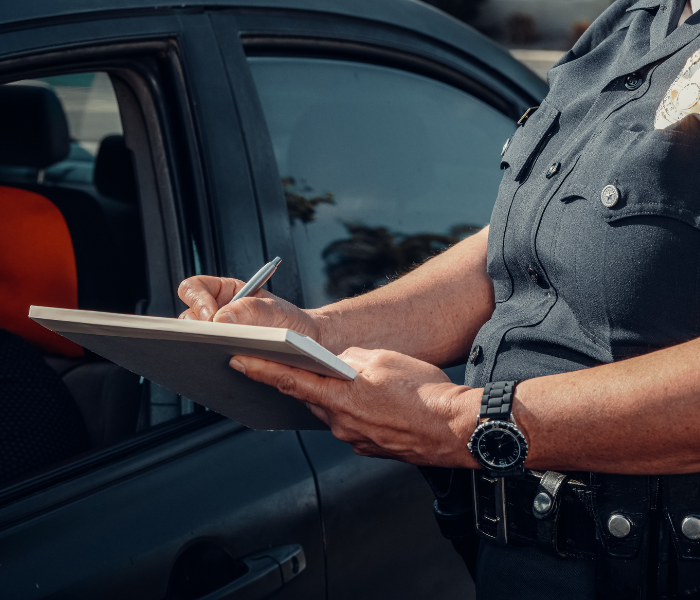


A traffic ticket in California features a due date and a dollar amount. For many drivers, paying it feels like the path of least resistance. But that fine is rarely the full cost of the violation. In many cases, drivers should fight their traffic ticket to avoid license and insurance issues later on.
If you are weighing that decision, a Los Angeles traffic ticket attorney at Fight My Ticket can review your citation and tell you whether contesting it is worth your time.
The Fine Is Not the Only Cost
The fine printed on your citation is the starting point for the question, “Should I fight a traffic ticket?” California adds penalty assessments and surcharges on top of the base fine, which can more than double or triple the total. A citation with a $35 base fine can easily swell to $200 or more once everything is added. Steeper violations have even higher figures.
Even the total financial penalty is a small part of the equation. The higher cost usually shows up in the form of points on your driving record and an increase to your insurance premiums.
How California’s Point System Works
Most moving violations add one point to your California driving record. Faster or more serious violations (e.g., excessive speeding or reckless driving) add two points. Those points typically stay on your record for about three years. During that window, they are visible to any insurer who checks your driving history.
Accordingly, paying the ticket can end up costing far more than the ticket itself. California is one of the most expensive states in the country for post-ticket insurance increases, with drivers commonly seeing their premiums rise at renewal. Multiplied over three years, a modest monthly increase costs hundreds more than the original fine.
Points can also add up and result in a license suspension. Under California’s negligent operator rules, the DMV can suspend your license once you accumulate:
- 4 points in 12 months
- 6 points in 24 months
- 8 points in 36 months
A single ticket moves you closer to these limits. A second or third violation in the same window can bump against the threshold.
Common Point Values
Not every ticket carries the same weight on your record. Here is roughly how common violations break down:
- Basic speeding ticket – 1 point
- Running a red light or stop sign – 1 point
- Illegal or unsafe lane change – 1 point
- Following too closely – 1 point
- First at-fault accident – 1 point
- Reckless driving – 2 points
- Driving over 100 mph – 2 points
- Hit and run – 2 points
- DUI – 2 points
- Driving on a suspended or revoked license – 2 points
- Cell phone or texting ticket – 0 points for the first offense; a second citation for the same offense within 36 months adds 1 point.
Two-point violations move you toward a license suspension twice as fast as an ordinary ticket. Therefore, the point value of your violation is often a useful signal for whether to fight the ticket.
How to Fight a Traffic Ticket in California
Contesting a ticket does not necessarily mean standing in a courtroom. California allows most infractions to be challenged through a trial by written declaration. This is where you submit your account and any supporting evidence in writing rather than appearing in person.
You can also request an in-person trial, where the citing officer must appear and testify. If the officer does not show up, the case is often dismissed.
For many tickets, an attorney can appear on your behalf for the entire process, meaning you may never have to take time off work or set foot in a courtroom.
When Fighting the Ticket is the Best Option
A few situations make contesting a ticket a strong option:
- The evidence is weak. Police use radar and lidar readings to determine if a driver is speeding. These devices depend on calibration and proper operator training. Likewise, an officer’s visual observations or pacing are often subjective. Any of these can be challenged.
- The ticket adds two points instead of one. Reckless driving, excessive speeding, and similar charges carry two points. The long-term insurance impact for such violations is worse than ordinary infractions and raises the risks of a points-based license suspension.
- You are already close to a license suspension. If you have other points on your record, even a small ticket can push you toward negligent operator limits.
- You drive for a living. Commercial drivers charged with violations can face federal disqualification from driving on top of anything California imposes.
An experienced traffic ticket attorney can help you determine whether these situations apply to you and what your options are for challenging the citation.
When Paying It Might Make More Sense
If the citation is minor and you have a clean record, you may qualify for traffic school. Attending traffic school may resolve the issue without the need for a contested trial. This option keeps the point off your public record without requiring you to build a defense.
Traffic school is a state-approved course that California allows eligible drivers to complete after certain infractions. It is an alternative to letting the conviction show up on your public driving record. It typically covers safe-driving practices, common causes of collisions, and updates to traffic law. Once you finish and the court confirms completion, the underlying violation is removed from your public record; it will not add a point to your DMV file and generally will not trigger the insurance increase that follows a standard conviction.
Not every ticket qualifies for traffic school. It is generally available only for one-point moving violations — and only if you have not already used the option within the past 18 months. It is also typically limited to drivers who hold a valid, non-commercial license.
California generally allows this option only once every 18 months. Therefore, it is worth saving for a higher-point ticket, rather than using it on the first citation that comes along.
What Happens If You Ignore the Ticket
Failing to respond to a citation by the deadline on the ticket is a separate offense in California under Vehicle Code Section 40508, distinct from the underlying violation. You can be charged with a failure to appear even if you would have beaten the original ticket — the two are treated as separate matters by the court.
In most cases, the court typically mails a notice giving you a short window to respond before the consequences escalate. Once that window closes, the penalties can rise to:
- A civil assessment of up to $300 added on top of your original fine
- A hold placed on your driver’s license, which can block renewal or reinstatement
- A bench warrant for your arrest, which stays active until the matter is resolved
- Referral of the unpaid debt to a collection agency
The law mainly targets drivers who knowingly ignore the court, not those who missed a date because they never received notice or had an emergency. If you did not know about your court date, that can form the basis of a defense to the failure to appear charge (but not the original ticket).
Is It Worth Getting a Traffic Ticket Lawyer?
If you decide to fight the ticket, you don’t have to do it alone. An experienced traffic attorney can:
- Review the citation and the stop for weaknesses. Officers make mistakes. An attorney knows which ones can overturn a ticket case.
- Determine whether the evidence supports a fight. An attorney can give you a realistic assessment of your odds before you commit time to a defense.
- Handle the paperwork and deadlines. Missing a filing window can cost you the case regardless of its merits.
- Appear in court on your behalf. For most infractions, an attorney can stand in for you, meaning you never have to take time off work or set foot in a courtroom.
- Cross-examine the citing officer at trial. If the officer’s testimony is inconsistent with the citation or their own equipment logs, a skilled attorney can challenge them on the stand.
- Negotiate a reduction when a full dismissal isn’t likely. Sometimes the best outcome is reducing a two-point violation down to a one-point violation (or getting a charge reduced to something that doesn’t carry the same insurance impact).
- Advise you on traffic school eligibility. An attorney can tell you whether fighting the ticket or using your traffic school option makes more sense for your specific record.
A reduced charge or keeping a point off your record can save you far more than the cost of hiring someone to handle it.
Get Your Los Angeles Traffic Ticket Reviewed
If you are dealing with a Los Angeles traffic ticket and are not sure whether it is worth fighting, a short review costs you nothing. Text your ticket to (323) 435-6045 to have it reviewed by our experienced traffic ticket attorneys at Fight My Ticket. We can provide preliminary guidance on whether you should fight your ticket to avoid more serious consequences down the line.